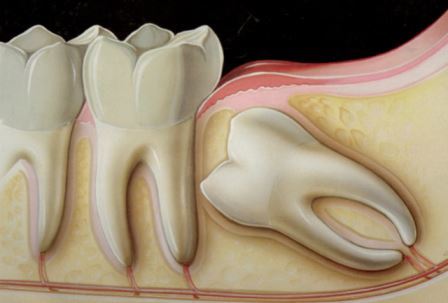
An impacted wisdom tooth may remain symptom-free for years, and not every one needs extraction. Assessment considers pain, repeated infection, decay, gum health, damage to the adjacent tooth and possible cystic change.
Panoramic imaging is often the first step. Three-dimensional imaging may be recommended when root position and nearby nerves or sinuses require closer evaluation.
Monitoring can be appropriate when the tooth is healthy and stable. If removal is recommended, the surgeon explains the reason, technique, recovery and relevant risks.
Seek assessment if you notice recurrent swelling, difficulty opening your mouth, bad taste or pain behind the last molar.
This content is for general information. Diagnosis and treatment require a personal dental examination.